

 Home
-
Home
-
Vehicle Growth ≠ Infrastructure Maturity
For the past five years, the micro-mobility story has mostly been about capacity: fleet size, deployment density, daily rides. But that narrative doesn’t hold everywhere. In many US and European cities, private e-bikes and delivery riders keep multiplying while shared scooter operations are shrinking or shutting down. A late-2025 case study from the EU Urban Mobility Observatory compared Paris, Berlin, and Stockholm: Paris ultimately banned shared scooters outright, while Berlin and Stockholm chose to stay open but tighten parking enforcement instead¹. Vehicle growth was never proof a city was ready.
What actually determines whether micro-mobility becomes core urban transportation comes down to three chronically underrated problems:
· Parking: where vehicles sit, and who keeps order
· Charging: where the power comes from, and how it gets delivered safely
· Battery management: who’s responsible for battery health and safety
Together these form the industry’s invisible foundation. A weak foundation means a bigger fleet just means bigger exposure.
Three Gaps, One Root Cause
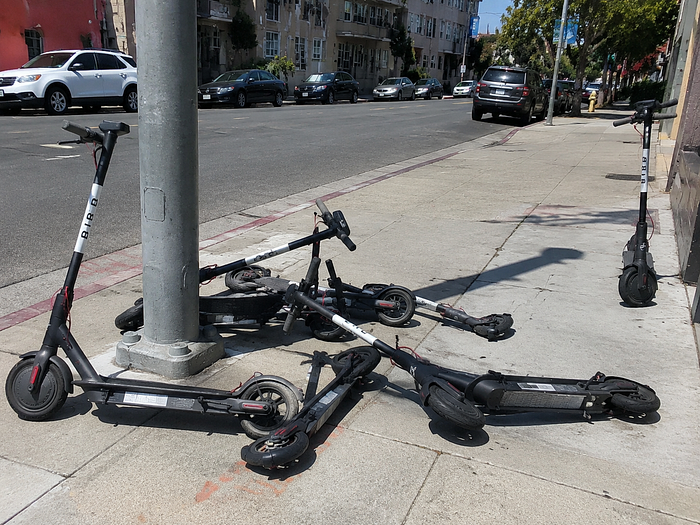
1. Parking: the uncontrolled “last meter”
Free-floating models shifted the cost of parking order onto cities. Enforcement has tightened sharply over the past two years:
· Scottsdale’s Ordinance 4680, effective July 2025, treats any device left in one spot for more than 72 hours as a violation subject to impoundment²
· Italy’s revised highway code, in force since 2025, now requires shared scooters to park only in roughly 400 designated zones; licensed operators dropped from nine to two, and fleet sizes were cut in half³
· Research shows dedicated parking needs a density of roughly one spot every 200 meters before compliance improves meaningfully⁴Press enter or click to view image in full size
2. Charging: the underrated operating cost
Whether it’s a shared fleet or a private e-bike, charging is a counterintuitive pain point: the more vehicles there are, the more operational drag this “small thing” creates. Under the traditional model, fleets rely on manual labor to haul vehicles back to a warehouse for bulk charging, which drives up labor and dispatch costs and leaves vehicles sitting idle “waiting to be picked up” for a meaningful share of the time, instead of serving riders. For private owners, the problem is more direct — running a cord through a stairwell or charging indoors against the rules becomes the default, which leads straight into the next, more dangerous problem.
3. Battery management: the safety line, and a crisis of trust
Lithium battery fires in e-bikes have made headlines across multiple countries and cities in recent years, and the trend hasn’t eased over the past two years — if anything, it has triggered a wave of new rules:
· In April 2026, San Francisco moved to ban the sale of uncertified lithium-ion batteries after more than 120 related incidents citywide in 2024–2025 alone, including a December 2025 fire that displaced 130 residents from an apartment building⁵
· California’s SB 1271, in effect from 2026, requires all e-bikes and batteries sold in the state to carry UL certification⁶
· New York already proved the model works: after certification requirements took effect in 2023, lithium battery fire deaths fell from 18 to just 1 by 202⁵⁷
The math is simple: battery management isn’t a nice-to-have feature. It’s the line that decides whether city governments, insurers, and the public keep tolerating this industry at all. Without standardized battery lifecycle management — thermal control, current limiting, aging detection, fire isolation — and certification standards, every unit of fleet growth is really just more latent risk.
Why the Three Problems Are Locked Together
· A parking spot with no charging is just an orderly way to occupy space without solving anything
· A charger with no battery oversight just moves fire risk from a home balcony into public space
· A single-point solution that ignores deployment cost can never reach the density a city actually needs
That’s why bare racks or lone outlets have never become the industry’s standard answer.
Where PowerBox Fits: Get Parking + Charging Right First
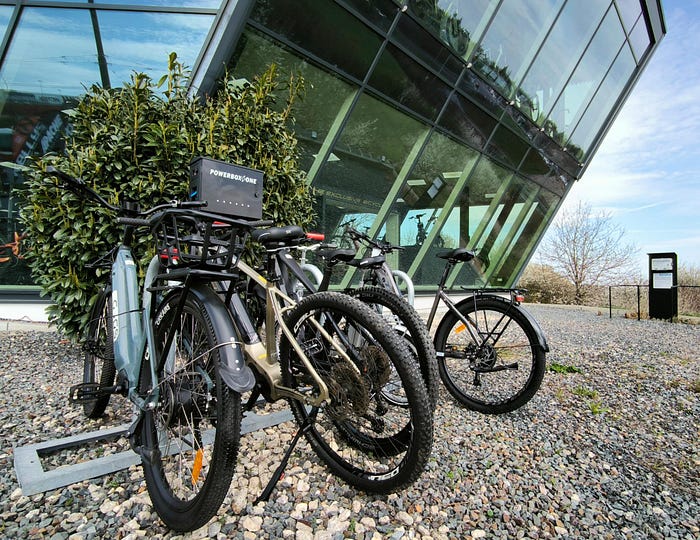
We deliberately kept e bike charging station simple — solve parking and charging, the highest-frequency problem, properly, instead of building a full battery-management platform from day one.
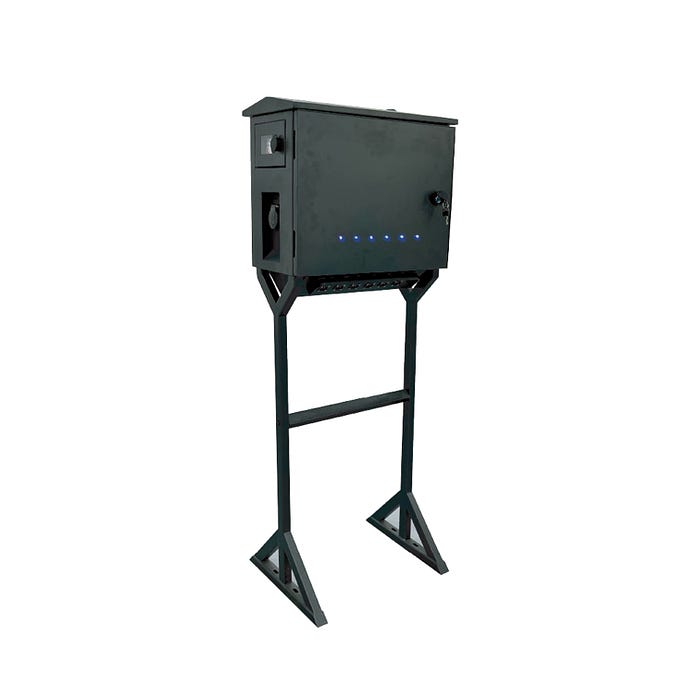
· Built for the outdoors: a pole-mounted power cabinet, weatherproof and lockable, made for unsheltered curbside or community settings
· Basic circuit protection: built-in overload and short-circuit protection, enough to cover the most common electrical risks in outdoor charging
· Park and charge in one motion: vehicles plug in right where they park — no separate search for a charger
· Buy once, charge free: a dedicated physical connector means charging is unlimited once you own the cable — no scanning a code, no per-session payment
More information:https://www.mdacharger.com/chargingstation/ebike-charging-station.html
To be clear: PowerBox solves a more fundamental layer — can a rider park nearby, plug in safely, and charge for free. The buy-once model is also a direct answer to what actually drives unsafe indoor charging: not ignorance of the risk, but the friction of scanning a code, waiting for an app, and worrying about balance every time.
The Bottom Line
The growth curve in micro-mobility has already proven there’s demand. How far that curve can go depends on whether the industry finally confronts the real bottleneck — infrastructure, not vehicle count.
References
EU Urban Mobility Observatory. The evolution of shared e-scooter systems in Europe: Governance, impacts, and future directions. December 19, 2025. https://urban-mobility-observatory.transport.ec.europa.eu/evolution-shared-e-scooter-systems-europe-governance-impacts-and-future-directions_enCity of Scottsdale. Electric Bikes, Scooters — Ordinance №4680 (effective July 1, 2025). https://www.scottsdaleaz.gov/codes-and-ordinances/bikes-scootersIl Sole 24 ORE. Regulation of electric scooters in Europe: regulations, challenges and impacts on sharing. May 20, 2025. https://en.ilsole24ore.com/art/electric-scooters-europe-tightens-rules-on-speed-and-sharing-AHfFRaqFindings Press. Scooting around the Margins: Testing Scooter Parking Design Pilots. June 16, 2025. https://findingspress.org/article/127199-scooting-around-the-margins-testing-scooter-parking-design-pilotsThe San Francisco Standard. SF moves to ban unsafe e-bike batteries after fires displace hundreds, kill one. April 7, 2026. https://sfstandard.com/2026/04/07/sf-lithium-ion-battery-legislation-bilal-mahmood/HOVSCO. What Are 2026 E-Bike Battery Safety Standards in California? (California SB 1271, signed September 27, 2024, effective January 1, 2026.) https://www.hovsco.com/blogs/hot/what-are-2026-e-bike-battery-safety-standards-in-californiaUL Standards & Engagement. Deaths From NYC E-Bike Fires Fell to One in 2025 — Two Years After UL Standards Written Into Law. https://ulse.org/insight/deaths-from-nyc-e-bike-fires-fell-to-one-in-2025-two-years-after-ul-standards-written-into-law/